





How often should I take collagen 10000mg?
How often should I take collagen 10000mg?
Collagen supplements are a great way to hold back the early signs of ageing. Whether it be visible signs like wrinkles or sagging skin, or invisible things like stiff joints, a good collagen supplement can help. Collagen 10000mg (or 10 grams) is a healthy dosage of collagen peptides to get from your supplement, but how often should you take it? In this post, we will explore what makes up the collagen content in your supplement and what the science tells us about dosages. At Kollo, we want to ensure you get the very best results from your supplements, so we aim to give you all the information you need.
Why do we use collagen peptides in Kollo?
When it comes to collagen supplementation, collagen peptides are a no-brainer as the collagen content. The reasoning for this is simple: if supplements used complete collagen molecules, our bodies simply wouldn’t be able to absorb the collagen into the bloodstream efficiently.
Let’s unpack that a little bit. The collagen we use for supplements comes from animals – in the case of Kollo, it is derived from the skin and scales of fish. That collagen is a protein that is abundant in the bodies of many animals as well as humans, providing structure and good health to many tissues throughout the body. Proteins are made up of chains of amino acids, and it is these that we need in our bodies to stimulate the production of new collagen. The problem is that complete collagen molecules are very large – too large for our digestive systems to absorb efficiently. The molecular weight of a collagen molecule is around 300,000 Daltons, which is a lot, so our bodies would have to work very hard to break them down before the amino acids can be accessed. That means that bioavailability of collagen molecules is very low.
Hydrolysed collagen 10000mg
To address this issue, the complete collagen molecules are broken down into collagen peptides. What this means is that the triple helix of the collagen molecule is unravelled, leaving the three separated chains of amino acids. This is done using a process called hydrolysis which breaks down the molecules using a combination of water and enzymes (or chemicals, in some cases). The collagen peptides tend to have a molecular weight of between 2000 and 5000 Daltons, which is far smaller than the size of the complete collagen molecule.
Consequently, collagen peptides are far more bioavailable and can be absorbed with much greater efficiency into the bloodstream. Once in your system, the amino acids trigger and fuel the creation of new collagen in your body, which can be used to help improve the health and structure of various tissues in the body, including:
• Skin
• Bones
• Tendons and ligaments
• Cartilage
• Muscles
• Organs
• Blood vessels
This is why we use collagen peptides in Kollo – we want to ensure maximum efficiency for the collagen production in your body, so hydrolysed collagen is the answer.
Why hydrolysed collagen 10000mg?
The next question is why we choose a dosage of 10000mg for our collagen shots. The answer is that we followed the science. There has been plenty of research into the different benefits of collagen supplementation, and this has led to various conclusions about the requisite dosage to achieve certain benefits. Let’s take a look at what the studies have found:
• Skin elasticity: studies have shown that a dosage of 2.5-5 grams of collagen peptides can begin showing benefits for skin elasticity in as little as 8 weeks.
• Skin hydration: the research indicates that a 10 gram dosage can lead to improvements in skin hydration after around 56-84 days.
• Improved nail health: 2.5 grams of collagen can lead to improvements in nail growth and brittleness after approximately 24 weeks.
• Reduced joint pain: 8 grams of collagen has been shown to be enough to lead to improvements in joint pain for sufferers of osteoarthritis in a time period of 24 weeks.
• Increased bone density: in a study involving postmenopausal women, a dosage of 5 grams over 12 months led to improvements in bone density.
This is just a small sample of the studies that exist, but all have indicated under controlled conditions that people can experience benefits from collagen supplementation. These benefits generally relate to fighting the early signs of ageing, so they can make you look and feel younger for longer.
Compiling the results of all these studies, we concluded that the optimal dosage is hydrolysed collagen 10000mg (10 grams) to cover all the potential benefits as comprehensively as possible. When developing Kollo, we followed the science when making every decision, as well as the experience of our team and the feedback from countless collagen supplement users to create the ideal collagen supplement.
So how often should I take hydrolysed collagen 10000mg?
One feature that was common to every scientific study into collagen peptide supplementation was the frequency that the dosage in question was taken. The simple answer is that you need to take your 10 grams of collagen every single day. The time periods in which people experience the benefits may vary somewhat for different people, as everyone’s body is a little different, but we all should be taking our supplement every single day.
The reason for this is simple: we need to keep supplying our bodies with the nutrients they need consistently so that collagen synthesis happens efficiently. The most important amino acids in collagen peptides for triggering collagen production in our bodies are:
• Glycine
• Proline
• Hydroxyproline
These amino acids are abundant in collagen peptides. You can get them from other sources, but not in the same quantity as they are available from a collagen supplement. By providing this abundance of fuel for your collagen production every single day, you ensure your body keeps producing new collagen consistently to replenish the levels in your body and restore the more youthful look and feel to your body.
How long do I need to keep taking collagen 10000mg for?
As you can see from the previous section, different benefits of collagen supplementation take different amounts of time to materialise. We mentioned that these timeframes may differ somewhat for different people, but they give a rough, research-backed idea of how long it might take to enjoy the benefits of your hydrolysed collagen 10000mg intake.
However, once these benefits begin to arrive, you should continue taking your daily dose of collagen peptides. Your body will naturally produce less and less collagen as you age, and collagen supplementation is designed to fight back against this. If your skin, joints or other parts of your body become healthier from taking collagen supplements, this is a sign that you should keep taking them for the long haul if you want those benefits to last.
Collagen supplementation cannot stop ageing from taking place, but it can hold it back and help to minimise its impact. When combined with a healthy lifestyle and taking good care of your skin, joints, bones, muscles, etc. it may help you look and feel younger than your years for the long-term.
What makes Kollo special?
Kollo has been carefully developed to maximise the benefits you experience from your collagen supplement. We considered everything from the science to the user experience when designing it to ensure it is easy to incorporate into your daily routine and has maximum effectiveness when taken. Here are the things that make Kollo stand out from the crowd:
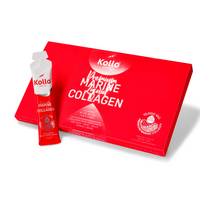
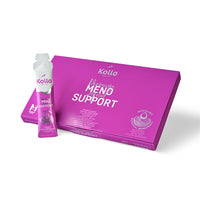
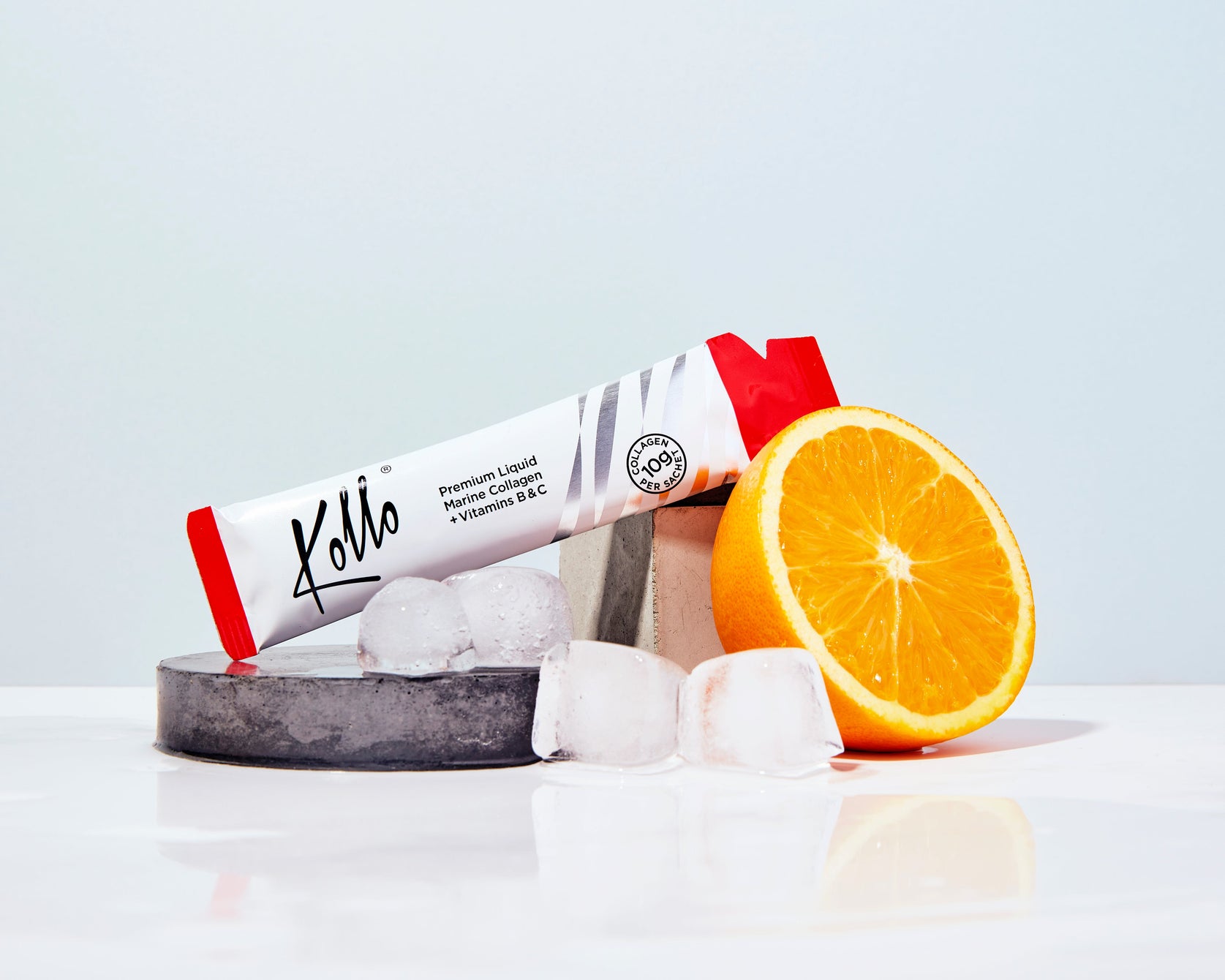
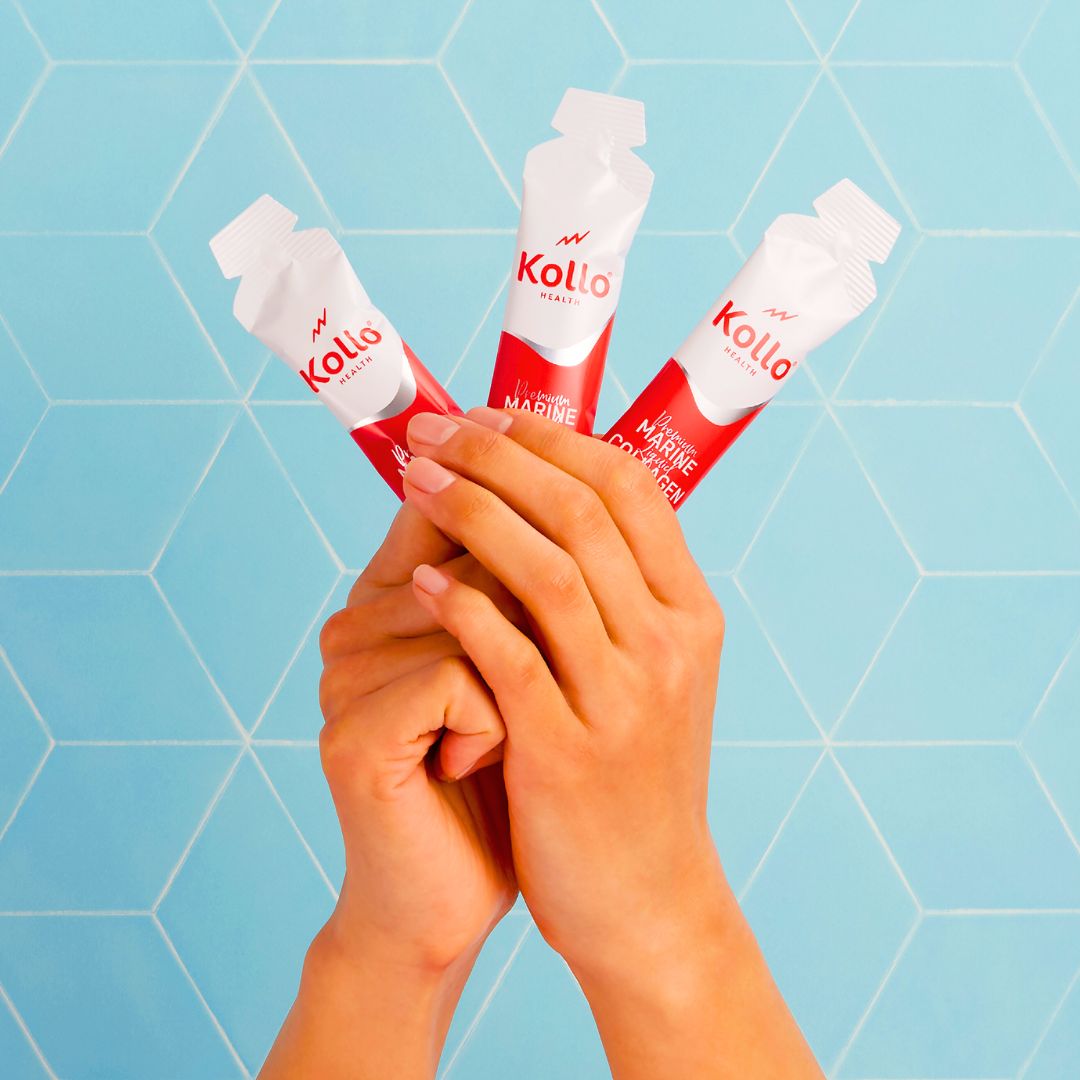
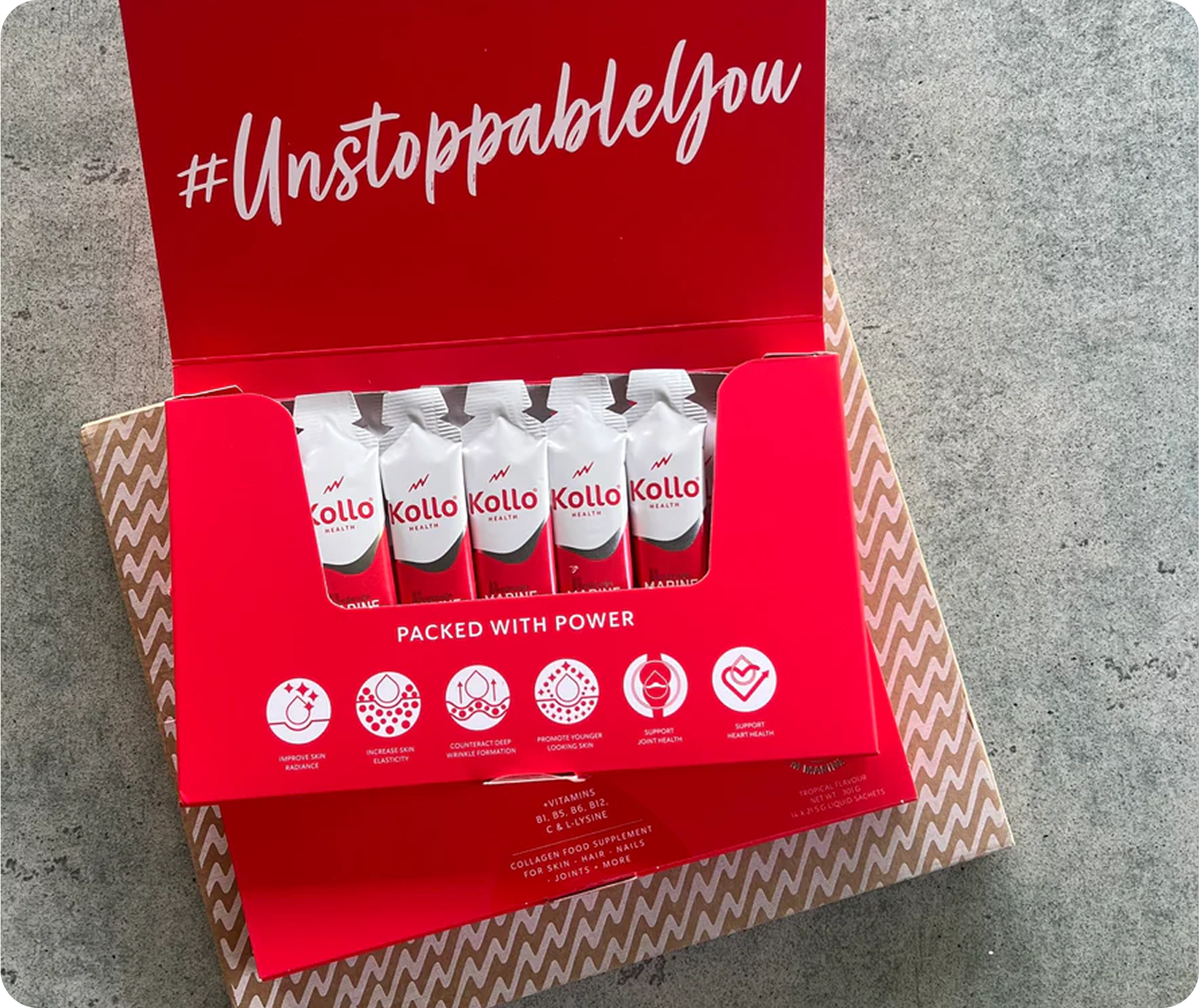
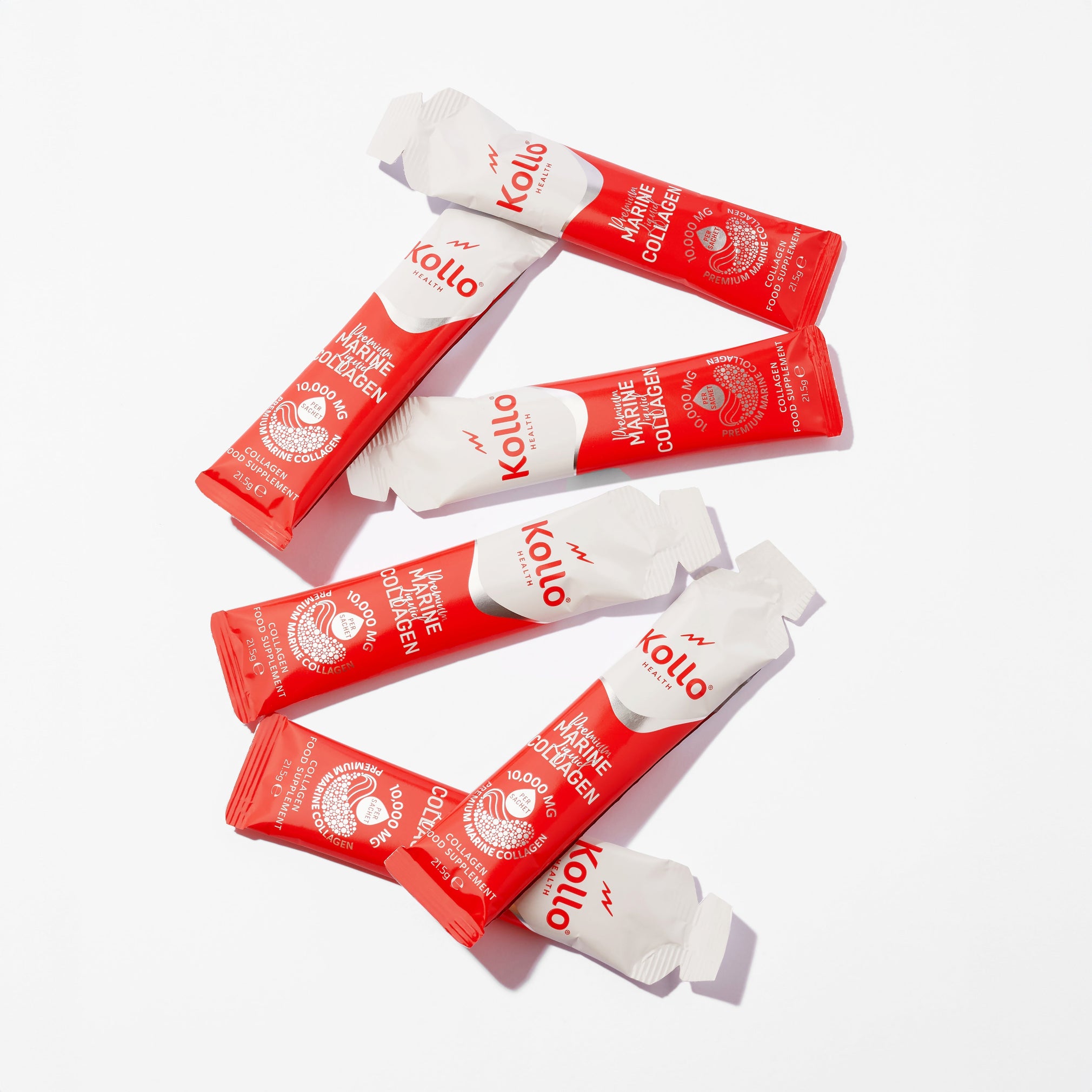
• It is supplied in a daily sachet containing a shot of liquid that can be easily added to water for quick consumption.
• It has a delicious tropical taste derived from natural flavourings.
• The liquid improves the bioavailability of the active ingredients since your body doesn’t have to break anything down.
• We use premium grade marine collagen peptides with extremely high purity and integrity.
• It is type I collagen, which is the most abundant in your body, from marine sources, which are known to be the most bioavailable.
• We add B vitamins, vitamin C and l-lysine to the formula to nurture the mechanisms by which your body creates new collagen.
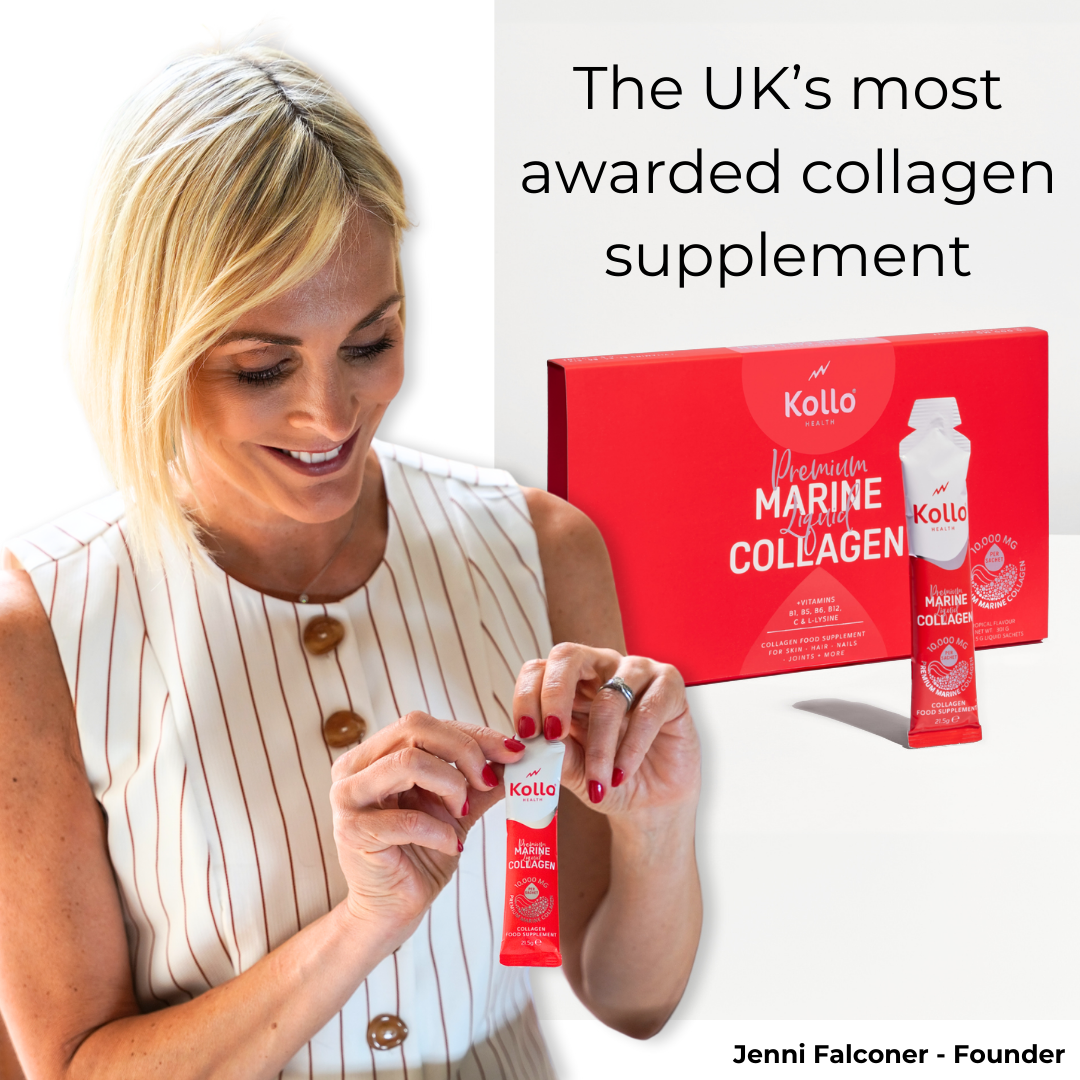
• We have won numerous awards and received thousands of 5-star reviews from verified buyers.
In addition to all this, you know that we supply hydrolysed collagen 10000mg to ensure our product meets the recommendations of the available scientific evidence for all the associated benefits of collagen. And we ensure all our packaging is fully recyclable for maximum sustainability, because we love our planet too!
Learn more about Kollo
Our website is your one-stop shop for everything you need to know about Kollo. We have sections dedicated to the scientific research, the details of what’s in our product, and the unfiltered, unedited reviews from thousands of verified buyers. We also provide a detailed blog section with posts that cover virtually everything you could want to know about Kollo and collagen in general.
If you still have questions, please don’t hesitate to get in touch and someone from our team will answer them for you.
Similar Articles

Why you need to be a bit selfish this Christmas by Suzy Reading

How to feel safe - By Suzy Reading
Why Consistency Matters in Your Collagen Routine
What’s Happening Internally When You Take Collagen
When to Expect Visible Results from Your Collagen Supplement

Why Collagen is a Golfer’s Secret Weapon

Help! I'm stuck in urgent mode & I can't access the exercise, time with friends, fun that I need!
Why Collagen Becomes Essential After 25 – And How to Support It

How to find routine when there isn't one

Human, not machine: the truth about resilience and the art of pacing yourself